
Full article
Full article text extracted for easier reading in-app.
Mortgage Rates Are Creating a Two-Tier Housing Market
First-time homebuyers are taking the brunt of rising housing costs, including steadily climbing mortgage rates.
Giulia Carbonaro · Newsweek
Mortgage rates hit their highest level in over a year this week, exacerbating American would-be homebuyers’ affordability struggles while giving an even bigger edge to cash buyers and foreign investors.
The average 30-year fixed-rate climbed to 6.81 percent in the week ending July 31 from 6.76 percent the previous week, according to the latest data in the Mortgage Bankers Association’s seasonally adjusted index, causing demand for home loans to drop in an already suffocated market.
Mortgage rates had fallen to their lowest level since 2022 toward the end of February, just before spiking again after the United States and Israel launched joint strikes on Iran. As the war continues, mortgage rates are still inching up.
This has caused U.S. would-be homebuyers to take a step back, as shown by weakening demand for loans since late February. Applications for a mortgage to purchase a home dropped 3.6 percent in the week ending July 31 from the previous week, according to MBA data, while its refinancing index fell 1.9 percent to the lowest since mid-2025.
The Deepening Divide Between Mortgage-Reliant Buyers and Those Paying Cash
Mortgage-dependent households in the U.S. face higher monthly payments whenever rates rise. Cash buyers do not. Paying for a house in cash also removes financing and appraisal contingencies, lowering the risk of delays and making a purchasing offer more attractive to sellers even when this is not necessarily the highest bid.
Because of these inevitable dynamics, rising mortgage rates are exacerbating an existing two-tier system in the U.S. housing market, where low- to middle-income households are increasingly struggling with rising costs while wealthier households manage to stay afloat and even reap the benefits of a crisis that has pushed millions of Americans to the sidelines.
But cash purchases are not rising as a result of this deepening divide.
According to the latest data by the National Association of Realtors (NAR), referring to June transactions, 25 percent of home sales were cash, unchanged from the previous month and down from 29 percent a year earlier.
The advantage that buyers who can pay cash have over those forced to rely on mortgages, however, is growing.
According to a March report by Redfin, U.S. homebuyers have had less need to use cash to win bidding wars this year because there are many more sellers than buyers, and growing economic uncertainty has encouraged even wealthy households to preserve liquidity rather than invest it in real estate—and that is likely why their numbers have not increased in recent months.
Crucially, another niche category of buyers stands to take advantage of these dynamics: international investors. According to NAR’s 2026 International Transactions in U.S. Residential Real Estate report, 47 percent of foreign buyers paid cash between April 2025 and March 2026, compared with 28 percent of all existing-home buyers.
Among non-resident foreign buyers, the share was even higher, at 67 percent.
As Usual, First-Time Buyers Draw the Short Straw
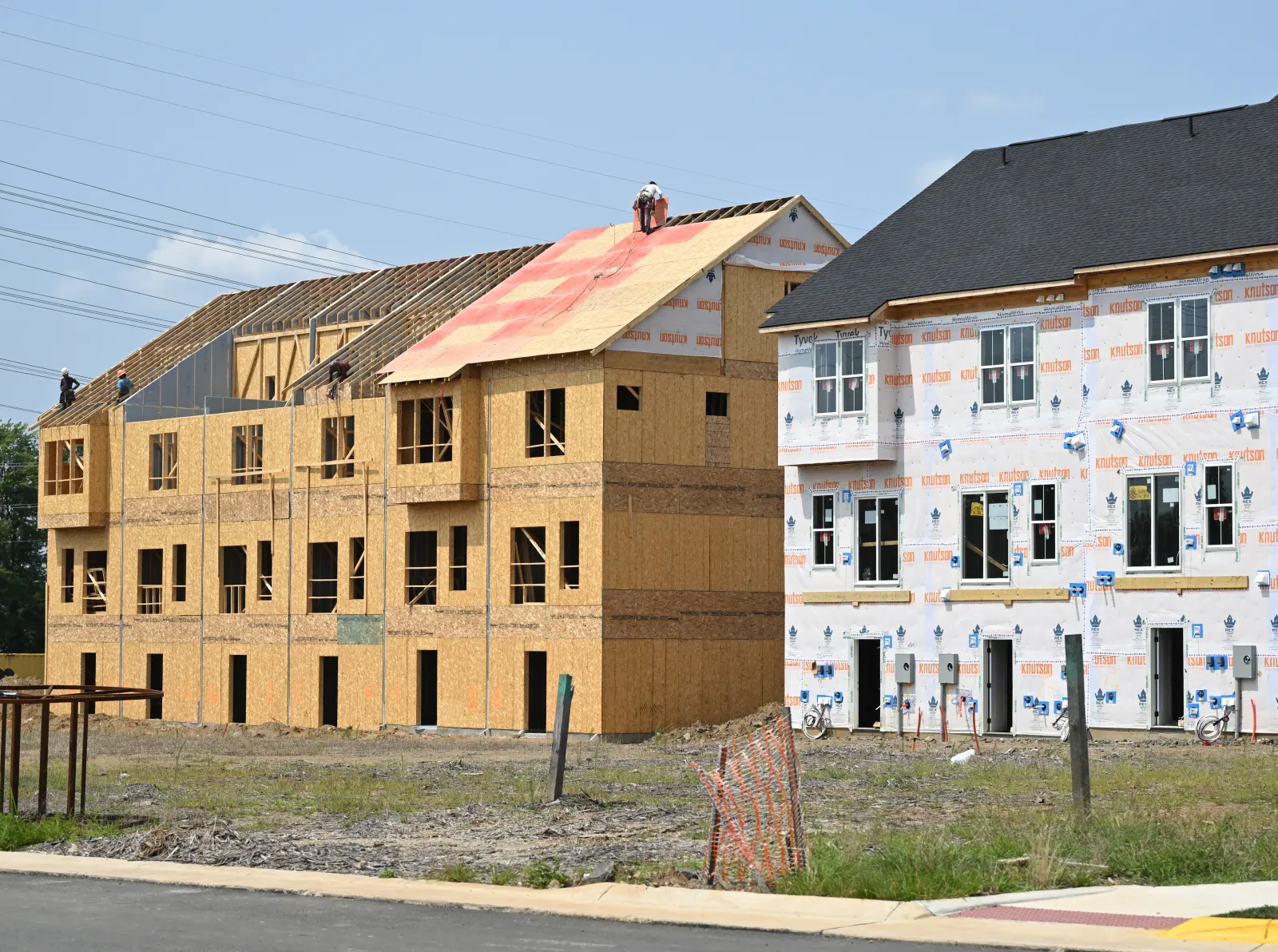
For the past few years, first-time homebuyers in the U.S. have been in the worst possible position in the market. While home prices skyrocketed during the pandemic, they did not build any equity. Amid rising property taxes and home insurance premiums, and historically high borrowing costs, homeownership has slipped so far out of reach that the average age of the typical first-time buyer in the U.S. has reached a record 40, according to NAR data.
When it comes to rising mortgage rates, it is once again first-time buyers who stand to suffer the most from these hikes.
...
NAR’s 2025 Profile of Home Buyers and Sellers, released in November, found that 92 percent of first-time buyers in the U.S. financed their purchase, compared with 70 percent of repeat buyers. First-time buyers financed a median 90 percent of the purchase price, while repeat buyers financed 77 percent.
It is unclear where things will move from here—whether first-time buyers will face even bigger hurdles, or their lives will get easier. The picture has been complicated by the Federal Reserve’s decision to freeze interest rates in its latest decision-making meeting, a pause that many experts believe might be followed by a hike later this year.
According to data from the U.S. Census Bureau, median monthly owner costs for households with a mortgage are already much higher than for households who own their property free and clear, averaging around $1,600 to $1,800, compared to roughly $550 to $600 for mortgage-free homeowners.
Contact Newsweek editors on this story: Ben Kelly and Sam Wilson.